
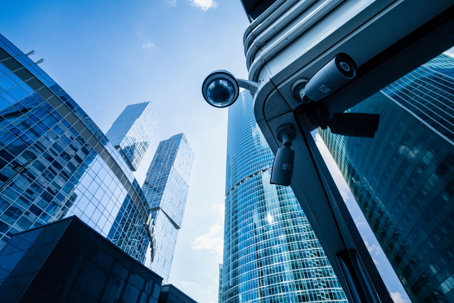
A business owner arrives at work and discovers a break-in happened overnight. Security footage shows exactly what occurred, when it happened, and where the intruder entered.
While that information is valuable, it often raises another question: could the incident have been detected sooner—or avoided altogether?
That's one reason business security has evolved so much over the last decade. Cameras are still important, but today's systems do much more than capture footage. Businesses now rely on a combination of surveillance, access management, remote monitoring, and real-time alerts to gain better visibility into what is happening across their properties.
For organizations throughout San Diego County, from office buildings in La Jolla to warehouses in Escondido and industrial facilities in El Cajon, security has become as much about operational awareness as it is about crime prevention.
Security Cameras Still Matter—But Their Role Has Changed
There was a time when business security cameras were installed primarily to investigate incidents after they occurred.
Today, many businesses use cameras every day for reasons that have nothing to do with theft or vandalism.
Property managers review activity across multiple locations without leaving the office. Warehouse supervisors verify deliveries and loading dock activity. Retail managers investigate customer complaints with video instead of relying on conflicting accounts.
Cameras have become part of day-to-day operations. They help businesses answer questions, document events, and maintain visibility across areas that managers can't physically monitor at all times.
For many organizations, the value of surveillance isn't just security—it's having a clearer understanding of what's happening throughout the property.
Why Access Control Is Becoming a Bigger Priority for Businesses
A surprising number of security problems begin with someone who was supposed to have access.
An employee leaves the company but still knows the entry code. A contractor keeps a key longer than expected. A vendor is given unrestricted access to areas they only need occasionally.
These situations are common, especially in growing organizations where access permissions change frequently.
Modern access control systems make it easier to manage who can enter specific areas and when. Instead of replacing locks or tracking down physical keys, businesses can update permissions digitally.
This flexibility becomes especially useful for:
- Employee onboarding and offboarding
- Contractor and vendor access
- Restricted inventory areas
- Server rooms and records storage
- Multi-tenant properties
Just as important, access logs create a record of activity that can help managers understand who entered a location and when.
The Businesses That Benefit Most From Layered Security
Different properties face different risks, which is why the most effective systems are designed around how a facility actually operates.
Warehouses and Logistics Facilities
Warehouses and distribution centers often handle valuable inventory while managing frequent deliveries and vehicle traffic.
Surveillance, controlled access points, and monitoring can help managers maintain visibility across loading docks, storage areas, and restricted sections of the property.
Multi-Tenant Office Buildings and Mixed-Use Developments
Office buildings often need to accommodate employees, visitors, delivery drivers, contractors, and tenants throughout the day.
A layered approach helps property managers balance convenience with oversight, particularly in shared entrances, parking areas, elevators, and common spaces.
Construction Projects and Industrial Parks
Construction sites present a unique challenge because conditions change constantly.
Equipment is moved. Materials arrive and leave. Work zones expand and shift.
Temporary surveillance, mobile camera units, and access management systems can help contractors maintain oversight without needing permanent infrastructure at every stage of the project.
Multifamily Communities
Apartment complexes and multifamily developments often require security measures that support both residents and property managers.
Controlled entry systems, monitored common areas, and strategically placed cameras can help improve visibility while supporting day-to-day operations.
How Remote Monitoring Changes Security Response Times
Most incidents don't happen when a manager is actively watching a camera feed.
They happen late at night, over weekends, during holidays, or when a property is temporarily vacant.
That's where remote monitoring fills an important gap.
Rather than relying solely on recorded footage, monitored systems allow trained personnel to evaluate alerts as they occur. If unusual activity is detected, the situation can be reviewed immediately and escalated when necessary.
This can be especially useful for:
- Vacant commercial properties
- Construction projects
- Warehouses
- Industrial facilities
- Multi-building campuses
- Businesses with limited after-hours staffing
In many cases, faster awareness leads to faster decisions, which can help reduce disruption and limit losses.
When Mobile Security Cameras Make More Sense Than Permanent Systems
Not every property needs a permanent camera installation.
Some sites are temporary. Others lack reliable power or internet connectivity. In these situations, flexibility often matters more than permanence.
Mobile security camera services have become increasingly popular because they can provide coverage where traditional systems may not be practical.
Construction Projects
Construction sites are one of the most common applications.
Mobile units can be deployed quickly to monitor equipment yards, material storage areas, entry points, and active work zones. As the project evolves, the cameras can be repositioned to follow activity across the site.
Vacant Properties
Empty commercial buildings are often vulnerable to trespassing, vandalism, illegal dumping, and theft.
Mobile surveillance allows owners to establish visibility without investing in a permanent installation while the property awaits renovation, sale, or occupancy.
Remote Sites and Temporary Operations
Some facilities simply do not have the infrastructure needed to support a traditional system.
Mobile units equipped with cellular connectivity and independent power sources can provide coverage for remote locations, temporary work sites, utility projects, and special events where permanent systems would be difficult or cost-prohibitive to install.
For many businesses, mobile surveillance serves as a practical bridge between having no visibility at all and investing in a permanent solution.
Common Gaps Business Owners Discover After an Incident
After a security incident, business owners often discover that the issue wasn't a complete lack of security—it was a gap they didn't realize existed.
A side entrance wasn't covered by cameras. A keypad code hadn't been updated in years. A recently renovated area created a blind spot that nobody noticed.
Some of the most common issues include:
- Coverage gaps created by changing layouts
- Shared credentials that remain active for years
- Limited oversight at loading docks or secondary entrances
- Lack of monitoring during off-hours
- Security systems that haven't evolved with the property
These vulnerabilities often remain hidden until a specific event exposes them.
Regular security assessments help identify weaknesses before they create larger operational problems.
What to Look for When Choosing a Security Provider
Technology matters, but long-term support matters just as much.
A security system should evolve alongside the business it serves. As facilities grow, staffing changes, or operations expand, the system should be able to adapt.
When evaluating providers, ask about:
- Experience with similar properties
- System design and planning
- Monitoring capabilities
- Maintenance and support
- Scalability
- Integration options
The goal isn't simply to install equipment. It's to create a system that continues meeting operational needs years after installation.
Frequently Asked Questions
Are security cameras enough to protect a business?
Cameras provide visibility and documentation, but most businesses benefit from combining surveillance with access management and monitoring.
What is the difference between access control and surveillance?
Surveillance helps businesses observe and document activity. Access control determines who can enter specific areas and when.
Can I monitor multiple business locations remotely?
Yes. Many modern platforms allow managers to view cameras, receive alerts, and manage access across multiple locations from a centralized dashboard.
Are mobile security cameras a good fit for construction sites?
Yes. Their flexibility makes them particularly useful for projects where site layouts change over time.
How long should security footage be retained?
Retention periods vary depending on operational needs, industry requirements, and available storage capacity.
Building a Security System That Works for the Way Your Business Operates
The strongest security strategies are built around how a property functions every day.
For some businesses, that means better oversight of inventory and deliveries. For others, it means managing access across multiple buildings, monitoring remote locations, or improving visibility after hours.
A thoughtful combination of surveillance, access control, monitoring, and temporary or permanent camera solutions can help address those challenges while supporting daily operations.
At Silverstrand Technologies Inc., we provide security camera installation, access control solutions, security camera monitoring, and integrated site security services for businesses throughout Southern California. To discuss your property's security needs, contact us at (619) 732-0628 or visit us online to schedule a consultation.